The progression of coding classes for kids has moved from a niche activity to a necessary one, especially in our digital age. Children as young as five years old are learning to code while driving critical thinking skills with other disciplines that are not part of just screen time. With so many coding schools for kids available, it is not an easy decision. Online coding classes for kids have incredible flexibility and are better suited for accessibility so kids can learn for themselves at their own pace – anywhere. In addition, coding classes for kids online will often provide the kids with a stronger individual support mechanism to guide their minds and help them work through those early struggles of learning to program. The way we teach coding is very important and can change the lenses in which kids engage with code and learning.
Introduction to Coding for Kids
The process of debugging, finding and fixing errors in code, teaches children perseverance and resilience. They learn that challenges are not roadblocks but opportunities for growth, developing a mindset that embraces difficulties rather than avoiding them.
In fact, early exposure to coding prepares children for future opportunities in an increasingly digital job market. As technology continues to advance, coding literacy will become even more valuable across virtually all career paths.
Consequently, coding classes for kids online have seen tremendous growth, offering accessible ways for children to develop these critical skills from anywhere. Quality coding schools for kids balance technical learning with creative exploration, ensuring children develop both the hard and soft skills necessary for future success.
Benefits of Coding for Kids
Coding classes for kids have become more important than ever before to prepare kids for a rapidly changing digital world. In our technology-focused society, coding has become an essential skill in the 21st century and gives children the best tools for problem solving and creative expression.
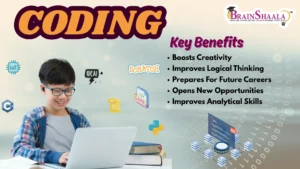
By learning to code, children become active creators instead of passive consumers of technology. When children learn to program, they identify problems, then decompose the complex problem into manageable steps. Children are then able to solve problems in everyday scenarios with confidence and precision.
Coding also enhances their ability to think critically and logically. This logical path helps children develop analytical skills to help them in all academic subjects, especially in mathematics and science.
Importantly, coding is technical and creative. With coding, children can:
- Express their ideas through game design, animations and interactive stories
- Experiment fearlessly in the knowledge that mistakes are valuable learning experiences
- Develop confidence that comes their ability to see their own ideas come to life
Coding classes for kids provide wonderful benefits that go far beyond the computer. While the children are developing coding skills, they are also laying an academic and career path for the future.
When students take coding classes, they develop value within all the subject areas. Research has shown that students who learn to code, perform better at problem-solving and in collaborative situations than students who do not learn to code. In addition, research published in the Journal of Educational Psychology, showed that students who learned computer programming out performed the control group (no programming) in critical thinking skills, math abilities, metacognition, spatial skills, and reasoning.
There are exceptional social benefits to children learning to code as coding also requires:
- Working in teams to solve complicated presented problems.
- Learning to give and receive constructive feedback to and from others.
- Communicating with peers and taking information.
- Facilitating coding in front of an instructor, or audience.
- Being empathetic by wanting to think about how the user experiences their completed product.
Future Opportunities with Coding
Looking to the future, coding provides children with an incredible opportunity. The Bureau of Labor Statistics reports that IT jobs have median annual wages more than double the overall median, with 15% expected growth over the next ten years. In addition, jobs that require coding skills, earn about INR 1,856,369 more annually than jobs that don’t skill.
Coding skills have become valuable in nearly every industry—not only the tech industry. Healthcare, finance, manufacturing, education, and entertainment all have professionals requiring some level of programming knowledge. By enrolling children in quality online coding classes for kids today, parents ensure that their children develop the technical foundation and thinking skills to enter the job market of tomorrow.
What Makes Brainshaala Offers That Makes Us Different
Quality coding classes for kids are a unique take on technical education that merges creativity and fun. When choosing coding classes for kids online, look for programs that distinguish themselves through their teaching methods, curriculum flexibility, and individual learning journeys.
The best coding school for kids will be able to deliver personalized learning experiences based on each child’s individual pace and interests. Instructors will not only have the technical knowledge, but also the ability to share complicated concepts in language that resonate with children. During the coding course, students will receive timely feedback and encouragement to develop their skills and confidence as well.
Notably, top-tier coding classes for kids incorporate these distinctive features:
- Small class sizes to promote individual attention
- Project-based learning with real-world applications
- Curriculum that develops with the child’s developing skills
- Consistent show and tell events for children to show off their productions
- Supportive community of like minded young coders
Quality online coding classes for kids must differentiate ages and adjust their teaching accordingly. Coding classes for 9 year olds may showcase visual block-based programming, coding classes for 14 year olds may introduce text based languages, like Python or JavaScript already exhibiting previously learned skills. Coding classes for 11 year olds and coding classes for 12 year olds can take a mixed approach.
The best coding classes for kids include a good balance between technical education and use of creativity to best allow children the ability to express themselves through technology. Finding that balance will keep your child engaged in the coding classes they are taking as they transition from simple block programming to the higher order coding languages, preparing them for educational and career opportunities in an ever-increasingly digital world.
Conclusion
Through this guide, we have shown how coding classes for kids have become paramount in the digital age. Notably, children learn they aren’t just consumers of technology, they’re also its creators. Coding teaches skills, especially critical thinking skills, that extend well beyond the screen. Children learn how to breakdown problems and use algorithmic thinking to funnel the information into digestible components. Coding also enhances children’s creative capabilities alongside their technical skills. Kids learn to express their creativity through designing games, animations, and interactive stories. In fact, children learn valuable lessons in perseverance as they encounter obstacles in debugging and ambiguous errors, and how to approach challenges systematically. There is no doubt these skills transfer into other subjects, resulting in better educational outcomes.
Coding classes also have a huge impact on social development. When some kids work together on a coding project they learn teamwork, constructive criticism, and clear communication. In other words, when parents invest in solid coding education, they are setting their child up for successful future-oriented employment in a digital job market where coding literacy is already resulting in massive wage premiums in nearly every industry.
When parents are seeking a coding course, they should look for coding classes that can personalize each child’s learning experience based on their individual pace and interests. Things like small class size, project-based learning and an age appropriate curriculum are also significant and notable characteristics of effective coding education.
As technology continues to develop, coding literacy will only become more valuable. By introducing children early, through quality, fun coding classes, parents build the technical skills and innovative thinking to be successful in the future. Coding education should also include a healthy blend of letting kids play, be creative and explore. The right coding education can prepare children to not just conceptualize digital education but ultimately to have all the tools they need to shape it.
FAQ
Q1. What is the appropriate age for children to start coding?
Kids can begin coding as early as 5-7 years old. Even at such a young age, these programs are great ways to enhance children’s creativity, critical thinking, and digital literacy.
Q2. What is the best way to expose my child to coding?
Start with coding platforms for kids like Scratch or Code.org that use block-based coding to creep basic concepts and programming skills through games and animations.
Q3. What are the best coding courses for different levels?
For beginner programmers, visual programming is a great option. If your child is at an intermediate level of programming, the next options can be Python or Java or other, when they have more confidence as a programmer they can even explore 3D game development or Arduino.
Q4. How does coding help kids?
Coding will help kids develop their problem solving and logic skills, enhance their creativity, and can help students perform better in school and their future lives while embracing teamwork and technology to prepare them for working in a tech-driven career someday.
Q5. How do online coding classes work?
Online coding classes are project-based and age-based, with a flexible schedule for lessons, interactive learning, and certified mentors for guidance.
Coding Courses by Age Group
Choosing the right coding classes for kids starts with having a good understanding of what is developmentally appropriate for children at this age-level. Children learn to do things quickly and sometimes in a very different way than adults.
Coding for Ages 5-8: Early Foundations
From ages 5 to 18, the differences in children’s learning knowledge is quite significant, and so it’s critical to adjust your approach to coding education. At the very earliest ages (5 to 6 years), young children learn better by using visual and block structured programming environments. In fact, the classes taught at the younger levels, are focused on learning the foundational concepts while participating in fun learning activities rather than actually typing code. Typical properties of coding classes for 5 to 6 year old children:
- Drag-and-drop setup to avoid syntax errors
- Gaming or adventure themes using recognized characters
- Availability for pre-readers, using minimal amounts of text upon entry
- Opportunities for Young Coders to undertake creative projects building confidence from getting almost immediate visual feedback
For preschool-grade 2 children, platforms like, Scratch Junior typically offer the best fit with enough introductions to cognitive thinking, plus children will have a fantastic time creating animations and storytelling projects
Coding for Ages 9-12: Building Skills
When children get to ages 7 to 12 years, coding classes for nine year olds through coding classes for twelve year olds introduces a lot of concepts. During this time frame, children usually make necessary advancements towards becoming competent coders that include the introduction of text-based environments and programming languages. For this age group the available coding courses typically include a course named Scratch Ninja: in Scratch Ninja, students will create their own games and animations simultaneously learning programming fundamentals including loops and conditionals. In addition, some online courses available for kids also offer Minecraft Coding, which provides children with opportunities to utilize their already favourite and preferred gaming world while introducing programming fundamentals.
Coding for Ages 13-18: Advanced Learning
Adolescents engage with more complex challenges. Coding classes for 13 year olds and coding classes for 14 year olds often include actual programming languages, such as Python, Java and JavaScript.
At so called “teenage level”, the best coding school for kids programs focus on:
- Project-based learning (with relevance to real-world projects)
- Web and mobile app development
- Game design using traditional tools
- Introduction to AI and data science.
Throughout the age categories above, the best coding classes for kids online provide the necessary personalized experience so instructors can adopt teaching practices and methods suited to how each child learns and the pace they wish to proceed with.